
Your Second Tokyo Street Kart Tour Starts with Checking Who Can Drive: How Non-Driving Companions Can Spend Their Time, by Store Area
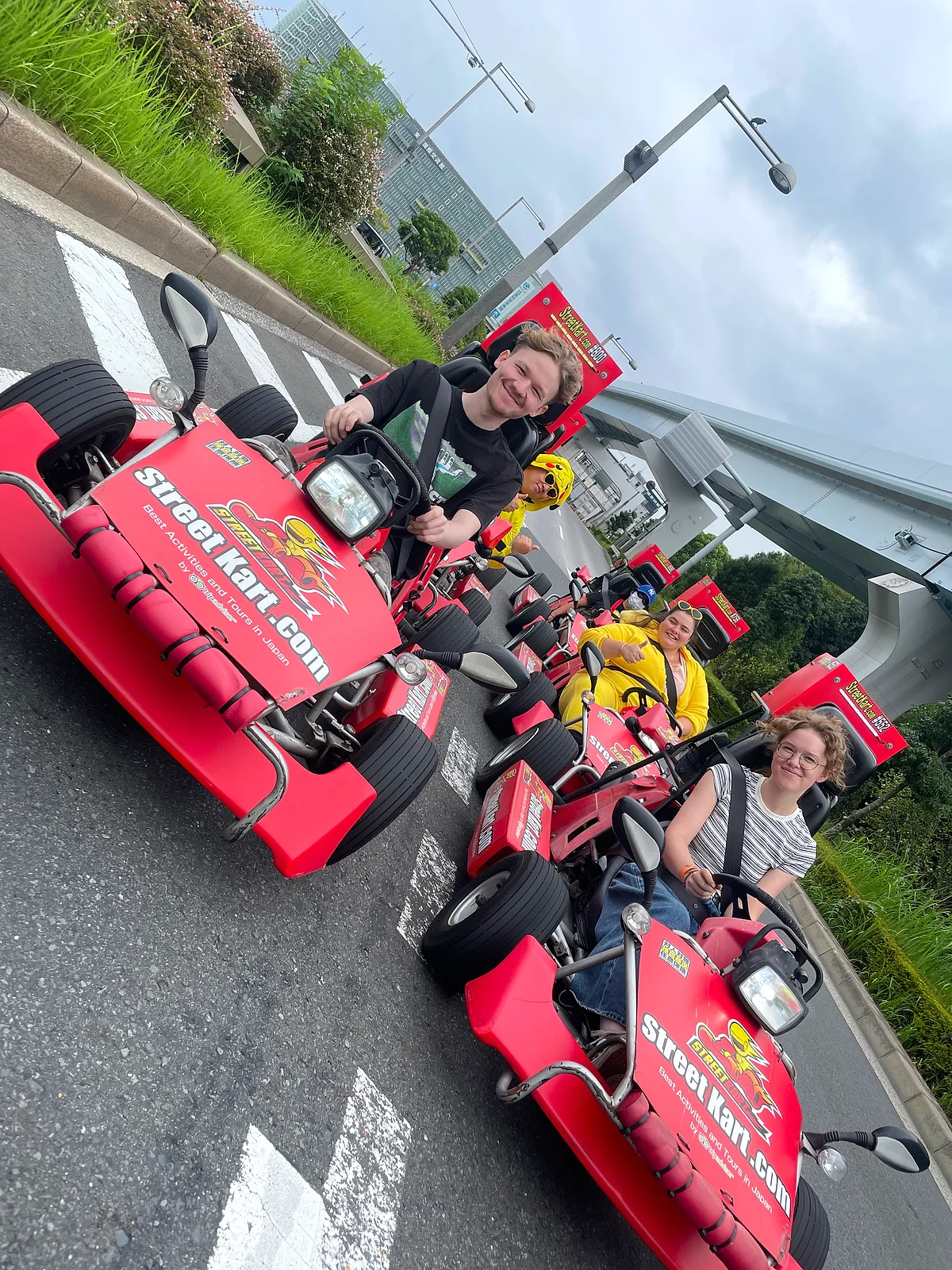
Your Second Tokyo Street Kart Tour Starts with Checking Who Can Drive: How Non-Driving Companions Can Spend Their Time, by Store Area
If you've ridden once, you probably remember how the steering wheel felt in your hands. You may also remember stopping at a red light and looking up at the big car that pulled in next to you. It was fun. So next time, you want to bring the people who couldn't come along before. That's a natural thing to want. But when your group includes people of different ages and fitness levels, the preparation looks quite different from the first time. This article is for people joining Street Kart in Tokyo for the second time. It covers, step by step, how to check whether everyone can take part and how to plan the time for those who won't be driving.
What Changes in Your Preparation the Second Time
Your first time, the preparation was mostly about you. You checked your license, chose comfortable clothes, and got to the meeting point on time. That was enough.
When you bring companions of different ages the second time, the preparation splits into three parts. First, check that each person who wants to drive meets the requirements. Second, plan where and how the non-drivers will spend their time during the tour. Third, choose a store and a date that make those two plans fit together.
Think back to what a street kart is like. You sit alone in the seat and steer it yourself. If you've ridden before, you probably remember the low eye level and the wind hitting you head-on. The karts are designed for one person, and passengers aren't allowed. You can't put a small companion on your lap and ride together, so make this the starting point of your plan. For the other participation requirements, start by checking the latest information on the official website.
If you put off this check, your plans can fall apart at the store on the day of the tour. People who loved their first ride tend to assume everything will be fine. That's exactly why you should check properly first.
First, Check Each Person Who Wants to Drive
Preparing for your second tour starts with checking each person who wants to drive, one at a time. Just because you could join the first time doesn't mean your companions can join under the same conditions.
There are several requirements, including age and a driver's license. If anyone has health concerns, read the official safety notes. The details can change, so this article doesn't state the requirements as fixed facts, since they might be out of date as soon as they're written. Please check the latest information on the official website.
For driver's licenses, the driver's license page covers which licenses are accepted, how International Driving Permits are handled, and what to bring on the day. Even if you rode the first time with no problems, a companion with a license from another country should check this page with you to confirm they can drive on that license. The rules differ by country. Also, you can't take part without your original license on the day. If you come to Tokyo without sorting this out, you won't be able to ride.
Check the tour language as well. Guidance on the day is basically in English. Whether other languages are available depends on the staff working that day, so it isn't guaranteed. If a companion isn't comfortable with English, it's a good idea to walk them through the briefing you heard the first time. Just knowing what will happen can make a big difference in how they feel on the day. The website itself is available in 22 languages.
For physical stamina, the basic rule is not to push yourself and to go at your own pace. How much focus does the ride take? How much do the city noise and wind wear on you? Having done it once, you should have a sense of this. Before you leave, talk honestly about whether your companions would enjoy it and whether they actually want to drive. Deciding not to drive is a perfectly good choice too.
If anyone in your group is pregnant, driving is not recommended. The karts have no suspension, so every bump in the road goes straight to your body. If she's thinking of taking part, she should talk to her doctor first.
Clothing is another thing to tell your driving companions ahead of time. Closed-toe shoes (sneakers are recommended) and comfortable clothes are advised. Open-toe shoes, heels, skirts, and dresses should be avoided. Mention this while they're packing, so no one ends up with only nice travel shoes.
Plan the Non-Drivers' Time, Starting with Your Choice of Store
This part may have the biggest effect on how much everyone enjoys the second trip. If some of your group won't be driving, expect to split up during the tour. Street Kart runs as guided tours led by trained guides, and each store has its own set routes.
So what non-drivers can do depends on what's around the store. There are seven stores in Tokyo (nine across Japan), but Akihabara 1st and 2nd are in nearly the same spot, and so are Shibuya and Shibuya Annex. It's easiest to think of your choice as four areas: Tokyo Bay (Shinkiba), Akihabara, Shibuya, and Shinagawa.
The stores have no parking. Plan on taking public transportation. Even on a trip with a lot of luggage, it's better to leave driving a car out of your plans.
Decide how you'll meet back up ahead of time, too. Tours start at the store and end when you return to the store and hand back the karts. Those waiting can meet the group by heading back to the store around the time the tour returns. Tour length varies by course, so check the details of the course you're booking on the official website and plan the waiting group's day around it. Also, the store lockers are meant for small items and won't fit large luggage like suitcases. If you drop big bags at your hotel first, both drivers and non-drivers can move around more easily.
At Tokyo Bay (Shinkiba), Spend Time in a Waterfront Park
For people who love wide-open views, the bay area store is a great fit. The tour route takes in Rainbow Bridge, Tokyo Tower, and Odaiba. That sense of freedom on the seaside roads never gets old. If you drove here the first time, the second time you can enjoy looking for spots you want to show to the people you've brought along.
For non-drivers, we suggest Kasai Rinkai Park, about 15 minutes from the store by car. This suggestion assumes a taxi each way. It's a large park facing Tokyo Bay, with a giant Ferris wheel and Tokyo Sea Life Park. Those with energy can walk around the park, while those who tire easily can sit down early and look out at the sea. It's nice that everyone can choose their own way to spend the time.
It can be windy by the water, so bring an extra layer just in case. Take your trash home and treat the lawns with care. If you're kind to nature, the waiting time becomes a real part of the trip too.
This course also has evening departures, and on those you can enjoy the night view. At night, Rainbow Bridge is lit up in seven colors. If you choose an evening tour, the waiting group can spend daylight hours in the park and then head to the store in time for the tour's return. If your group are early risers, you could start the day with breakfast at Toyosu Market, about 10 minutes from the store by car.
At Akihabara 1st and 2nd, Spend Time in Ueno
The Akihabara routes include the red-brick Marunouchi Building of Tokyo Station, the streets of Ginza, and Akihabara Electric Town. There's the station building that opened in 1914, and the electronics district lined with signs. It's a route that lets you drive through old and new Tokyo in one go.
For non-drivers, we recommend Ueno Park, about 5 minutes from Akihabara by train. Ueno Zoo, the Tokyo National Museum, and the National Museum of Western Art are all there. Animal lovers can head to the zoo, and those who want a quiet time can visit a museum. Your waiting group can even split up again.
Before or after the tour, it works well to stop by Kanda Myojin, about a 10-minute walk from the store. It's a shrine with 1,300 years of history. You could see the drivers off, then visit the shrine and wait for them to return safely.
Tokyo Station is also about 5 minutes from Akihabara by train. Besides the red-brick station building, there's the Tokyo Station Gallery. The drivers pass the station building in their karts, while the waiting group takes their time with the exhibitions inside. If you each enjoy Tokyo Station in your own way, you'll have plenty to talk about when you meet up again.
At Shibuya and Shibuya Annex, Spend Time Somewhere Green
The Shibuya routes include the Scramble Crossing, the zelkova-lined Omotesando, Harajuku's Takeshita Street, and the area around Meiji Jingu. The area is packed with people and cars, so the first time you may have been too busy watching your surroundings to really take in the scenery. The second time, you'll be a bit more relaxed. This time you should be able to really notice the color of the zelkova leaves and the energy of the crossing.
For non-drivers, we suggest Meiji Jingu or Yoyogi Park, about a 20-minute walk from the store. Both are large green spaces in central Tokyo. They're places where you can catch your breath in the middle of a busy city. If a 20-minute walk is too much, you can take a break at a café along the way.
The crowds around the station can be hard on companions with limited stamina. To be safe, pick a meeting spot away from the busy station front, somewhere calmer such as near the store.
For companions who don't want to walk much, Shibuya Scramble Square is about a 10-minute walk from the store. At 230 m, it's the tallest building in Shibuya. From the observation deck at the top, Shibuya Sky, you can look down on the streets the tour drives through. You could also take in the evening view before meeting back up.
What Makes Street Kart Special the Second Time Around
So far we've focused on preparation, but a second Street Kart tour is fun in ways the first one wasn't. Here are a few.
The first is your relationship with the guide. Every tour is led by a trained guide. If just keeping up with the guide in front took everything you had the first time, the second time you'll know how things go and have room to look around. That breathing room may be the biggest reward of a second tour.
The second is how you take in the scenery. Buildings that were just "wow" the first time start to come with the story of the city behind them. The sheer size of the 798-meter Rainbow Bridge. The Tokyo Station building with its 100 years of history. Scenery looks even better when you know what you're seeing.
The third is the fun of picking a different store. If you drove the bay area the first time, try Shibuya or Akihabara the second time. Even within Tokyo, a different route shows a completely different side of the city. Choosing the store again with your non-driving companions' plans in mind makes the whole trip feel fresh.
The fourth is that drivers and those who waited each come back with their own experiences. People back from the tour talk about the streets they drove, and those who waited talk about what they saw in the park or museum. One trip gives you two stories, and dinner gets a lot livelier. It's a really lovely thing.
The fifth is the track record. As of November 2023, across all stores, there had been more than 150,000 tours, more than 1.34 million customers, and more than 20,000 reviews, with an average rating of 4.9/5.0. These aren't current figures, but they show just how many people have explored the city on these tours.
The sixth is that you'll take photos differently. Even if you forgot to take pictures the first time, the second time you can think about which views you want to keep. Don't even think about taking photos while driving, though. It's a good idea to check the official website for the rules on photography and equipment beforehand. Take your time with photos around the store before or after the tour, together with your companions.
What to Check on the Official Website Before Booking
Finally, here's the booking process step by step.
First, for each person who wants to drive, check the participation requirements, including age, license, and health, on the official website. For licenses, use the driver's license page mentioned earlier to confirm each person can drive on their own license. If anyone doesn't meet the requirements, plan for them as a non-driver.
Next, choose a store based on how the non-drivers will spend their time. Tokyo Bay for a waterfront park, Akihabara for the zoo and museums, Shibuya for green spaces. If you choose a store where the waiting group can have a good time, the whole trip will go more smoothly. At the Shinagawa store, those waiting can visit Shinagawa Shrine, about a 5-minute walk away, or head to a canal-side café in Tennozu Isle, about a 20-minute walk away.
Then pick your date. Weekends fill up quickly, so once you know the day you want, we recommend booking early. Prices vary by season and time of day, so check the latest prices on the official website (kart.st).
Knowing how weather is handled also makes planning easier. In light to moderate rain, tours run as scheduled, and raincoats are provided free of charge. In heavy rain or typhoons, tours are canceled, and you can choose a shortened tour (with the difference refunded), a new date, or a full refund. Longer courses may also be shortened. If you include one museum or gallery in the non-drivers' plans where they can spend time indoors on a rainy day, the weather won't throw your day off.
Bookings are accepted via Facebook, LINE, and email. Check the official website for contact details and how to book. If you're unsure whether a companion can take part, ask before you book. That way you won't be scrambling on the day.
Your first time was about driving through Tokyo yourself. Your second time can be about everyone you travel with enjoying Tokyo in a way that suits them. A trip where everyone ends the day smiling is sure to be an even better memory than the first. Start by checking the requirements on the official website.
This article was originally written in Japanese and translated using AI. Some expressions may read unnaturally, and we appreciate your understanding. For the most accurate and up-to-date information, please refer to the official site at kart.st.
Street Kart is not affiliated with Nintendo or the Mario Kart series in any way. We do not provide costumes of Nintendo characters, and such costumes may not be worn during tours even if brought by participants.