

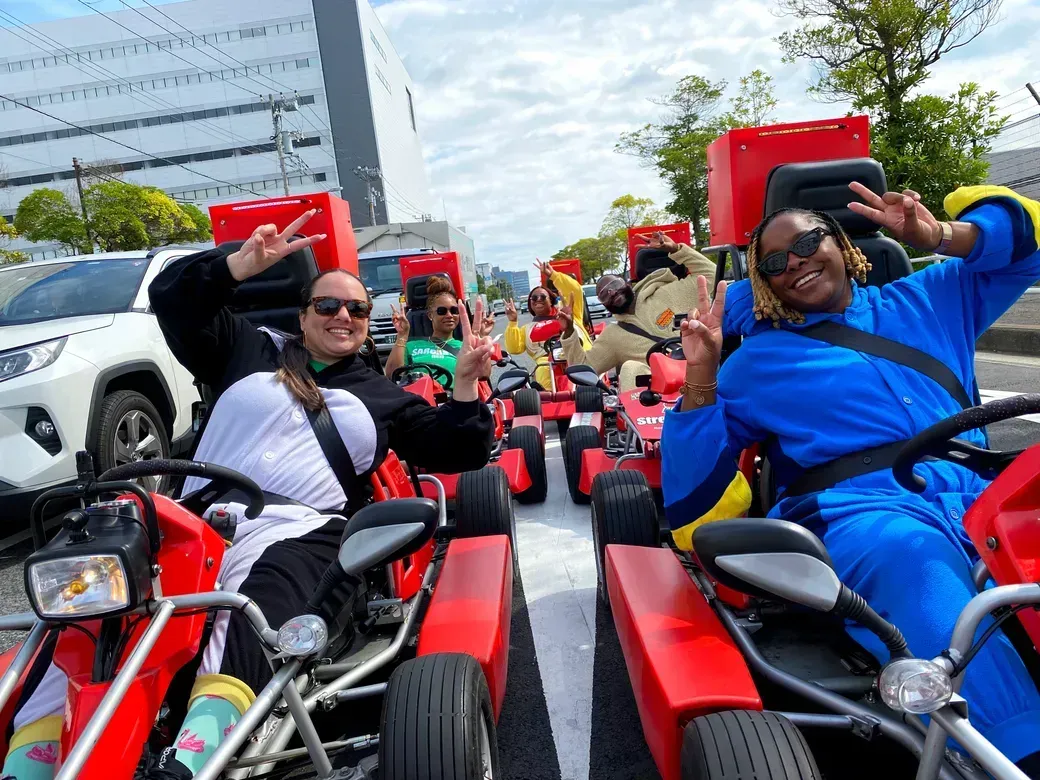
Exploring Tokyo’s Historic Buildings by Street Kart — Feeling the Wind as You Discover Memories of Edo and Meiji
Stopped at a red light, I glanced up and spotted a wooden gate tucked between the buildings. That’s Tokyo for you — the city hits you with history when you least expect it. Skyscrapers and Edo-era remnants sharing the same intersection is a sight that honestly still catches me off guard, even after a decade in Japan. Walking around is great, but Tokyo’s historical spots are surprisingly spread out, and there’s no way you can cover them all on foot in a single day. That’s where an interesting option comes in — cruising through Tokyo’s streets on a street kart while taking in the historic architecture. The view looking up from that low vantage point hits completely different from what you’re used to.
Historic Buildings Still Standing in Tokyo — Why They’re Getting So Much Attention Now
Tokyo actually has a surprising number of structures that survived both the Great Kanto Earthquake and the World War II air raids. People tend to think “Tokyo = modern metropolis,” but that’s only one side of the story. The stone walls around the Imperial Palace, the grand arches of Nihonbashi Bridge, the museum district in Ueno, the Kaminarimon gate at Sensoji — these have endured hundreds of years and still breathe as living parts of this city.
The reason “Tokyo history exploration” has been quietly trending among international travelers is that you get to experience “living history” that’s different from Kyoto or Nara. If Kyoto’s temples and shrines represent “preserved history,” then Tokyo’s historic buildings are “history woven into everyday life.” Meiji-era red brick stands in Marunouchi where office workers rush past, and the majestic forest of Meiji Shrine spreads out just behind the trendy streets of Harajuku. This contrast is what makes Tokyo so uniquely compelling.
The Imperial Palace Area — Where Tokyo’s History Begins
If you’re going to talk about Tokyo’s history, you’ve got to start with the Imperial Palace area. This was once the site of Edo Castle, and ever since Tokugawa Ieyasu established the shogunate here in 1603, it has remained the center of Japanese politics. The current East Gardens of the Imperial Palace still contain the original castle ruins, including the stone walls of the main tower base and the Hyakunin Bansho guardhouse, letting you feel the sheer scale of what once stood here.
As you cruise along the outer perimeter of the Imperial Palace, Nijubashi Bridge comes into view. This elegant iron arch bridge, set against the backdrop of stone walls and pine trees, is one of the most quintessentially “Japanese” scenes in all of Tokyo. Looking up at this view from the low seat of a kart delivers a completely different kind of impact than walking by. Even the way the stones are stacked varies from section to section, revealing the impressive engineering skills of the Edo period.
Move a little further and you’re in the Marunouchi district. Tokyo Station’s Marunouchi Building was designed by Tatsuno Kingo and built in 1914 as a red brick structure, then faithfully restored to its original appearance in 2012. Looking up at the octagonal ceilings in the north and south domes, with their intricate relief work, will literally take your breath away. It’s hard to believe this station building was designed over a century ago — it feels that modern and refined.
From Nihonbashi Toward Tsukiji — Traces of the Merchant District
Nihonbashi has been known as the starting point of Japan’s road network since the bridge was first built in 1603. The current stone bridge was completed in 1911, and embedded in its center is the “Origin of Japan’s National Routes” marker. The lion and kirin sculptures carved into the bridge railings are highly regarded as Tokyo cultural treasures. Unfortunately, the Shuto Expressway looms overhead, but hey, that’s Tokyo for you. There’s currently a project underway to move the expressway underground, so someday the sky above the bridge will open up again.
Around Nihonbashi, you’ll find grand modern buildings like the Mitsui Main Building and the Mitsukoshi Department Store. The Mitsui Main Building, completed in 1929 in neoclassical style with its rows of Corinthian columns, looks like it could be a European bank. Being able to take in these architectural gems one after another from a kart is a seriously luxurious experience.
What Makes a Street Kart History Tour So Special
Walking takes forever to get between spots, tour buses lock you into fixed routes, and taxis are comfortable but the view through the window feels detached. The beauty of a street kart is that you get to race through the city while feeling Tokyo’s air with your whole body.
With the engine humming and wind rushing past, you stop at a light and glance sideways to discover a tiny shrine nestled between buildings. These little “discoveries” are only possible from that low, roofless vantage point. Since many of Tokyo’s historic buildings line the main roads, they naturally come into view as you drive. The rush of passing in front of Sensoji’s Kaminarimon gate, the peaceful stillness of cruising along the Imperial Palace moat — these contrasts are Tokyo’s history felt through your entire body.
Street kart tours are guide-led, so there’s no worry about getting lost. The guide navigates the route safely, so even first-timers in Tokyo can focus entirely on soaking up the history. The best approach is to enjoy the scenery during the ride, then revisit the spots that caught your eye afterward at your own pace.
Why Street Kart Is the Go-To Choice
Street Kart has earned the trust of so many travelers for several clear reasons.
First, there’s the overwhelming track record — over 150,000 tours completed and more than 1.34 million customers served. That kind of volume means their safety management and route optimization have been refined to perfection. And with an average customer rating of 4.9/5.0★ across 20,000+ reviews, the numbers speak for themselves about the quality of the experience.
Having 6 locations in Tokyo alone is a huge advantage, giving you plenty of starting point options to match wherever you’re staying. They also have locations in Osaka and Okinawa, but for a Tokyo history tour, starting from one of the Tokyo shops is your best bet.
It’s also worth noting that Street Kart was the first go-kart operator in the industry to deploy guides specifically trained for international drivers. English service is standard, so you can join in with confidence even if you don’t speak Japanese. The guides know Tokyo’s roads inside and out, so they can efficiently take you through areas packed with historic buildings.
With a fleet of over 250 street-legal karts, vehicle maintenance is thoroughly managed. Their website supports 22 languages, making the booking process incredibly accessible. When you tell your friends back home “you can do this in Tokyo,” they can go from interested to booked without any hassle — that’s a real advantage.
For driver’s license requirements, there are multiple options including international driving permits, so check the official license information page for details. Please note that Street Kart has no affiliation whatsoever with Nintendo or the Mario Kart series, and does not offer any Mario Kart-related costumes.
The Ueno & Yanaka Area — Tokyo’s Most “Showa Era” Neighborhood
Another must-visit on any Tokyo history tour is the area stretching from Ueno to Yanaka. Ueno Park alone is packed with cultural assets, including the Tokyo National Museum main building (completed 1937, designed by Watanabe Jin), the National Museum of Western Art (designed by Le Corbusier, a UNESCO World Heritage Site), and the former Tokyo Music School Concert Hall (completed 1890, Japan’s oldest Western-style music hall).
The Yanaka area suffered relatively little damage from air raids, so many prewar wooden buildings still stand. The retro Showa-era atmosphere of Yanaka Ginza shopping street feels like stepping through a time warp. Looking down at the shopping street from the top of the Yuyake Dandan stairs, you’ll have one of those moments where you think, “I can’t believe a place like this still exists in Tokyo.”
The area is also dense with temples — said to number over 70. This is a remnant of the Edo period when the area was developed as a temple district. Wander through the narrow alleys and you’ll encounter one charming temple gate or stone Buddha after another. The ideal way to enjoy this area is to cruise the main streets by kart first, then come back to explore the spots that caught your eye on foot.
Asakusa — Tokyo’s Oldest Temple and Downtown Culture
Sensoji Temple, said to have been founded in 628 AD, is Tokyo’s oldest temple, and the giant red lantern at Kaminarimon is one of the city’s most iconic symbols. Nakamise-dori is one of Japan’s oldest shopping streets, with nearly 90 shops lining the roughly 250-meter approach to the temple. This shopping street’s history stretches back to the Edo period, when merchants were already serving visiting worshippers.
Asakusa has plenty to see beyond Sensoji. Asakusa Shrine (also known as Sanja-sama) sits right next to Sensoji, and its annual Sanja Festival every May is one of Tokyo’s most famous celebrations. Hanayashiki, which opened in 1853, is Japan’s oldest amusement park, and its retro vibe is refreshingly unique. Along the Sumida River, atmospheric bridges like Komagata Bridge and Azuma Bridge offer stunning photo ops with the contrast of old and new alongside Tokyo Skytree.
The sensation of passing through the Asakusa area by kart is truly one of a kind. The thrill of zipping through bustling tourist streets in a kart hits you simultaneously with the solemnity of centuries-old buildings. It’s a feeling you simply can’t get from any other way of sightseeing.
Getting Even More Out of Your Tokyo History Tour
To really make the most of Tokyo’s historic buildings, choosing the right season matters. In spring, cherry blossoms paired with the Imperial Palace stone walls are stunning. In autumn, the golden ginkgo trees in Ueno Park complement the historic architecture perfectly. Summer mornings are ideal for an early kart run — hit the major spots before the heat kicks in. And in winter, the crisp air makes every architectural detail pop with clarity.
Taking mental notes of spots you want to revisit after the tour is also a great move. Remember those buildings that caught your eye from the kart, then go back later for a leisurely stroll. This two-stage approach will multiply the richness of your Tokyo history experience many times over.
Tokyo’s history doesn’t just live in textbooks. It’s alive between the skyscrapers, on street corners, in the stone walls along the rivers — breathing and present right now. Feeling that history with the wind in your face is an experience that will completely change the way you see Tokyo. Book at kart.st. You can also check out detailed shop information and course guides here. Go meet a whole new side of Tokyo from the seat of a kart.
Costume Information
We do not offer rental costumes related to Nintendo or the “Mario Kart” series. We only provide costumes that respect intellectual property rights.
